Kewajaran Boikot Ekonomi Dalam Konteks Pemeliharaan Maqasid al-Syariah
The Legitimacy of Economic Boycotts in the Context of Preserving the Maqasid al-Shariah
DOI:
https://doi.org/10.55265/al-maqasid.v6i1.382Abstract
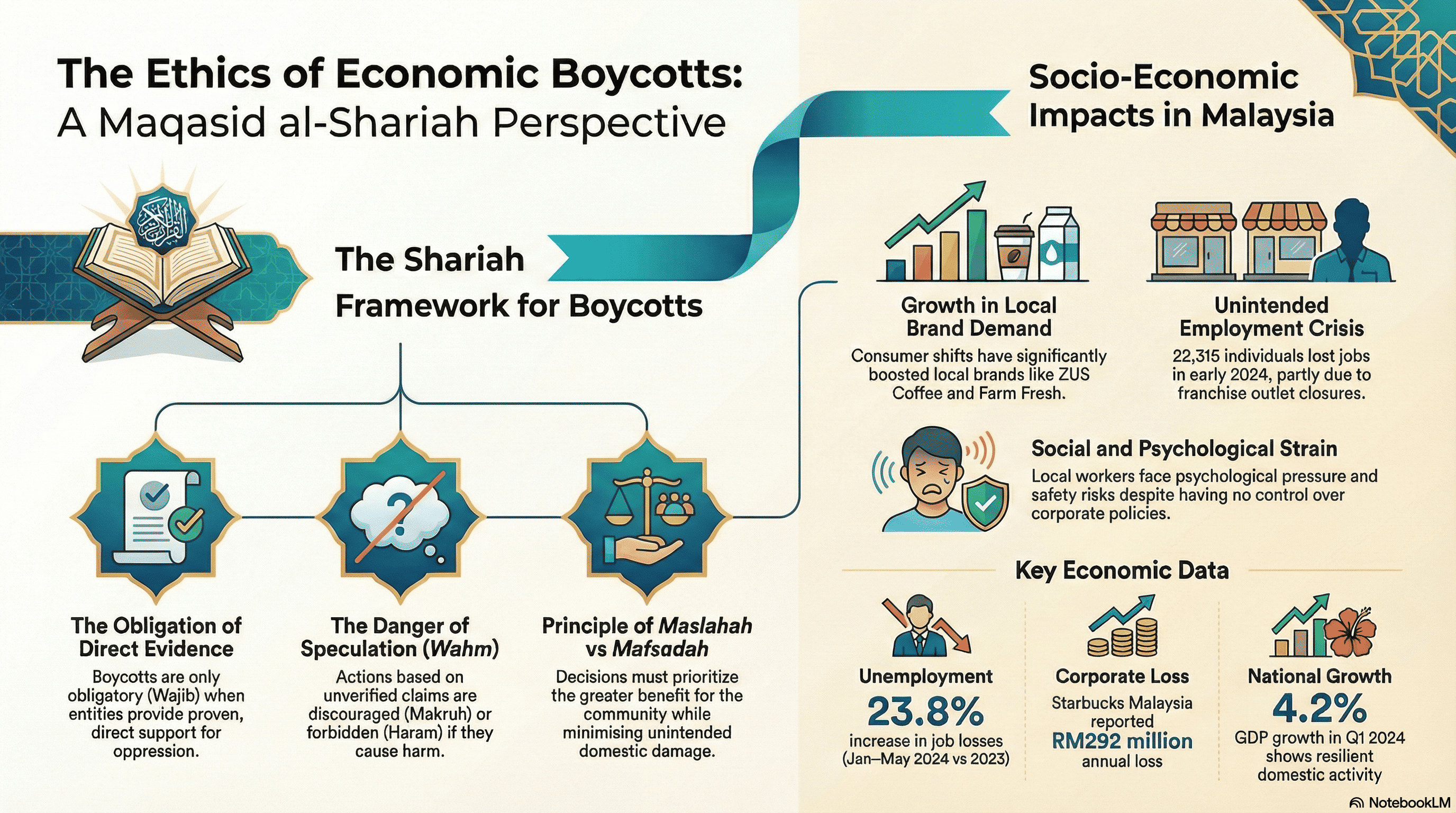
This study examines the justification for implementing boycott movements in Malaysia against companies associated with support for Israel, focusing on Shariah, economic, and sociopolitical analysis. The prolonged Palestinian-Israeli conflict has driven Malaysian society, particularly Muslims, to take solidarity actions through boycotts. However, the effects of such actions need to be evaluated academically to ensure that they align with the principles of Maqasid al-Shariah and do not result in greater harm. Through a qualitative research design using content analysis methods on primary and secondary sources, this study examines the legal framework related to muamalah with non-Muslims, the concept of al-ta‘āwun ‘alā al-ithm wa al- ‘udwān, and fiqh principles related to obligations and prohibitions in the context of boycotts. The findings indicate that a boycott becomes obligatory only when there is strong evidence that an entity provides direct support for oppression. However, its implementation may become makruh or haram if it is speculative, not based on authentic information, or if it causes greater harm to the local community. From an economic perspective, boycotts have a two-way impact, although they may lead to an increase in demand for local products. Data also show an increase in unemployment, the closure of franchise outlets, and a reduction in national revenue. From a sociopolitical perspective, boycotts without clear guidelines can lead to psychological pressure on workers, security disturbances, and the development of a culture of compliance without accountability. This study concludes that boycotts should be strategic, targeted, and well‑informed, rather than seasonal or driven purely by sentiment. This is to ensure that they bring benefit and do not cause harm to the Muslim community or the national economy.
Abstrak
Kajian ini meneliti kewajaran pelaksanaan gerakan boikot di Malaysia terhadap syarikat yang dikaitkan dengan sokongan kepada Israel dengan memberi tumpuan kepada analisis Syariah, ekonomi dan sosiopolitik. Konflik Palestin-Israel yang berpanjangan telah mendorong masyarakat Malaysia, khususnya umat Islam, untuk mengambil tindakan solidariti melalui pemboikotan. Namun, kesan tindakan tersebut perlu dinilai secara ilmiah bagi memastikan ia selaras dengan prinsip Maqasid al-Syariah dan tidak menimbulkan kemudaratan yang lebih besar. Melalui reka bentuk kajian kualitatif dengan menggunakan kaedah analisis kandungan terhadap sumber primer dan sekunder, kajian ini meneliti kerangka hukum berkaitan muamalah dengan bukan Muslim, konsep al-ta‘āwun ‘alā al-ithm wa al- ‘udwān, dan kaedah fiqh berkaitan kewajipan serta larangan dalam konteks pemboikotan. Dapatan menunjukkan bahawa boikot hanya menjadi wajib apabila wujud bukti kukuh bahawa sesuatu entiti memberikan sokongan langsung kepada kezaliman, namun pelaksanaannya boleh menjadi makruh atau haram sekiranya bersifat spekulatif, tidak berasaskan maklumat sahih, atau membawa mudarat yang lebih besar kepada masyarakat setempat. Dari sudut ekonomi, boikot memberikan kesan dua hala walaupun terdapat peningkatan terhadap permintaan produk tempatan, data turut menunjukkan peningkatan pengangguran, penutupan cawangan francais serta penyusutan hasil negara. Dari aspek sosiopolitik pula, boikot tanpa garis panduan menyebabkan tekanan psikologi kepada pekerja, gangguan keselamatan dan wujudnya budaya ikut-ikutan tanpa tabayyun. Kajian ini merumuskan bahawa boikot haruslah bersifat strategik, terarah dan berinformasi bukannya bermusim atau didorong sentimen semata-mata, hal ini bagi memastikan ia memberi maslahah dan tidak mencetuskan mafsadah terhadap umat Islam dan ekonomi negara.
Downloads
Downloads
Published
How to Cite
Issue
Section
License
Copyright (c) 2025 Muhammad Aizat Mohamad Paisal, Megat Mukhriz Megat Danuwa, Ahmad An-Nazif Ahmad Fuad, Mohamad Haziq Haiqal Mohamad Dom, Mohd Harifadilah Rosidi

This work is licensed under a Creative Commons Attribution-NonCommercial 4.0 International License.